
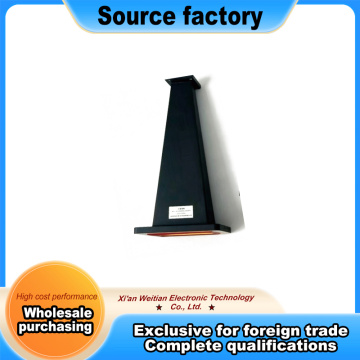
Waveguide Adapter
(Total 5 Products)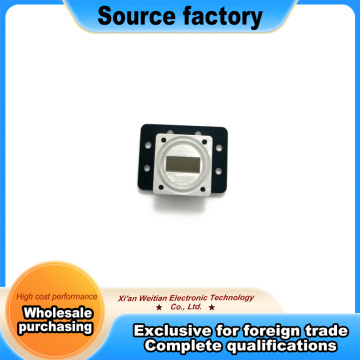



-
 Brand:WEITIANMin. Order:1Model No:WT-096WR284 to WR62 Non Adjacent Rectangular to Rectangular Waveguide Adapter for 12-15GHz This product is a professional Waveguide Adapter designed for non adjacent waveguide transition between WR284 and WR62 rectangular waveguides. The adapter operates...
 -
 Brand:WEITIANMin. Order:1Model No:WT-095WR112 to WR51 Non Adjacent Rectangular to Rectangular Waveguide Adapter for Ku Band This product is a professional Waveguide Adapter designed for non adjacent waveguide transition between WR112 and WR51 rectangular waveguides. The adapter operates...
 -
 Brand:WEITIANMin. Order:1Model No:WT-094WR51 to WR42 Adjacent Rectangular to Rectangular Waveguide Adapter for K Band Mode Conversion and System Interconnection This product is a professional Waveguide Adapter designed for adjacent waveguide transition between WR51 and WR42 rectangular...
 -
 Brand:WEITIANMin. Order:1Model No:WT-093WR19 to WR15 Adjacent Rectangular to Rectangular Waveguide Adapter for V Band Mode Conversion and System Interconnection This product is a professional Waveguide Adapter designed for adjacent waveguide transition between WR19 and WR15 rectangular...
 -
 Brand:WEITIANMin. Order:1Model No:WT-092WR75 to 19.05mm Rectangular to Circular Waveguide Adapter This product is a professional Waveguide Adapter designed to convert TE10 mode in rectangular waveguide to TE11 mode in circular waveguide. The adapter transitions from WR75 rectangular...
Waveguide adapters are essential components for connecting different waveguide types and sizes in microwave systems. This category includes rectangular to circular adapters and rectangular to rectangular adapters. These components enable seamless signal transmission between incompatible waveguide interfaces while maintaining good electrical performance. Rectangular to circular adapters convert the TE10 mode in rectangular waveguide to the TE11 mode in circular waveguide. The circular waveguide diameter must be carefully selected for optimal performance. It is recommended to use internationally compatible standard circular waveguide types. The bandwidth of the TE11 mode in circular waveguide is typically narrower than rectangular waveguide bandwidth. Therefore, for a given rectangular waveguide size, multiple circular waveguide diameter options may be available. The general principle is to select a larger circular waveguide diameter when frequency permits, as this provides better VSWR, phase response, and lower attenuation.
Rectangular to rectangular adapters connect waveguide sections of different sizes. Adjacent waveguide transitions operate within the overlapping frequency range of the two waveguide bands or within the frequency range of the higher frequency waveguide. Non adjacent waveguide transitions are typically specified based on the frequency range of the higher frequency waveguide and can be customized according to user requirements. In such transitions, the microwave signal usually enters through the smaller waveguide port. Since the output waveguide has a larger aperture, higher order modes may appear near the output port. This factor must be considered when connecting subsequent components to ensure system performance.
These waveguide adapters are widely used for connecting different waveguide specifications, mode conversion, microwave heating equipment cavity links, radar and communication RF system path adaptation, and microwave test platform component assembly. The robust construction uses quality materials including aluminum and copper with various finishes such as conductive oxidation, silver plating, and gold plating. Standard flange interfaces ensure compatibility with common waveguide systems. Custom options are available for non standard frequency bands and dimensional requirements.
Professional users across radar systems, Satellite Communication, microwave heating, and test laboratories rely on waveguide adapters for reliable interconnection. These components solve the fundamental challenge of connecting incompatible waveguide interfaces while maintaining good impedance matching, low insertion loss, and stable phase response. Waveguide adapters are indispensable for building flexible and scalable microwave systems where different waveguide standards must coexist. Whether for permanent installations or temporary test setups, these components provide the necessary interface conversion with minimal signal degradation. The combination of precision machining, quality materials, and careful electrical design ensures consistent performance across temperature and environmental conditions. Waveguide adapters represent a practical solution for system integration challenges, enabling engineers to combine components from different manufacturers and waveguide standards without compromising signal integrity.
Waveguide adapters are essential components for connecting different waveguide types and sizes in microwave systems. This category includes rectangular to circular adapters and rectangular to rectangular adapters. These components enable seamless signal transmission between incompatible waveguide interfaces while maintaining good electrical performance. Rectangular to circular adapters convert the TE10 mode in rectangular waveguide to the TE11 mode in circular waveguide. The circular waveguide diameter must be carefully selected for optimal performance. It is recommended to use internationally compatible standard circular waveguide types. The bandwidth of the TE11 mode in circular waveguide is typically narrower than rectangular waveguide bandwidth. Therefore, for a given rectangular waveguide size, multiple circular waveguide diameter options may be available. The general principle is to select a larger circular waveguide diameter when frequency permits, as this provides better VSWR, phase response, and lower attenuation.Rectangular to rectangular adapters connect waveguide sections of different sizes. Adjacent waveguide transitions operate within the overlapping frequency range of the two waveguide bands or within the frequency range of the higher frequency waveguide. Non adjacent waveguide transitions are typically specified based on the frequency range of the higher frequency waveguide and can be customized according to user requirements. In such transitions, the microwave signal usually enters through the smaller waveguide port. Since the output waveguide has a larger aperture, higher order modes may appear near the output port. This factor must be considered when connecting subsequent components to ensure system performance.These waveguide adapters are widely used for connecting different waveguide specifications, mode conversion, microwave heating equipment cavity links, radar and communication RF system path adaptation, and microwave test platform component assembly. The robust construction uses quality materials including aluminum and copper with various finishes such as conductive oxidation, silver plating, and gold plating. Standard flange interfaces ensure compatibility with common waveguide systems. Custom options are available for non standard frequency bands and dimensional requirements.Professional users across radar systems, satellite communication, microwave heating, and test laboratories rely on waveguide adapters for reliable interconnection. These components solve the fundamental challenge of connecting incompatible waveguide interfaces while maintaining good impedance matching, low insertion loss, and stable phase response. Waveguide adapters are indispensable for building flexible and scalable microwave systems where different waveguide standards must coexist. Whether for permanent installations or temporary test setups, these components provide the necessary interface conversion with minimal signal degradation. The combination of precision machining, quality materials, and careful electrical design ensures consistent performance across temperature and environmental conditions. Waveguide adapters represent a practical solution for system integration challenges, enabling engineers to combine components from different manufacturers and waveguide standards without compromising signal integrity.